Showing posts with label Alaska. Show all posts

Saturday, January 23, 2021

Beautiful North America


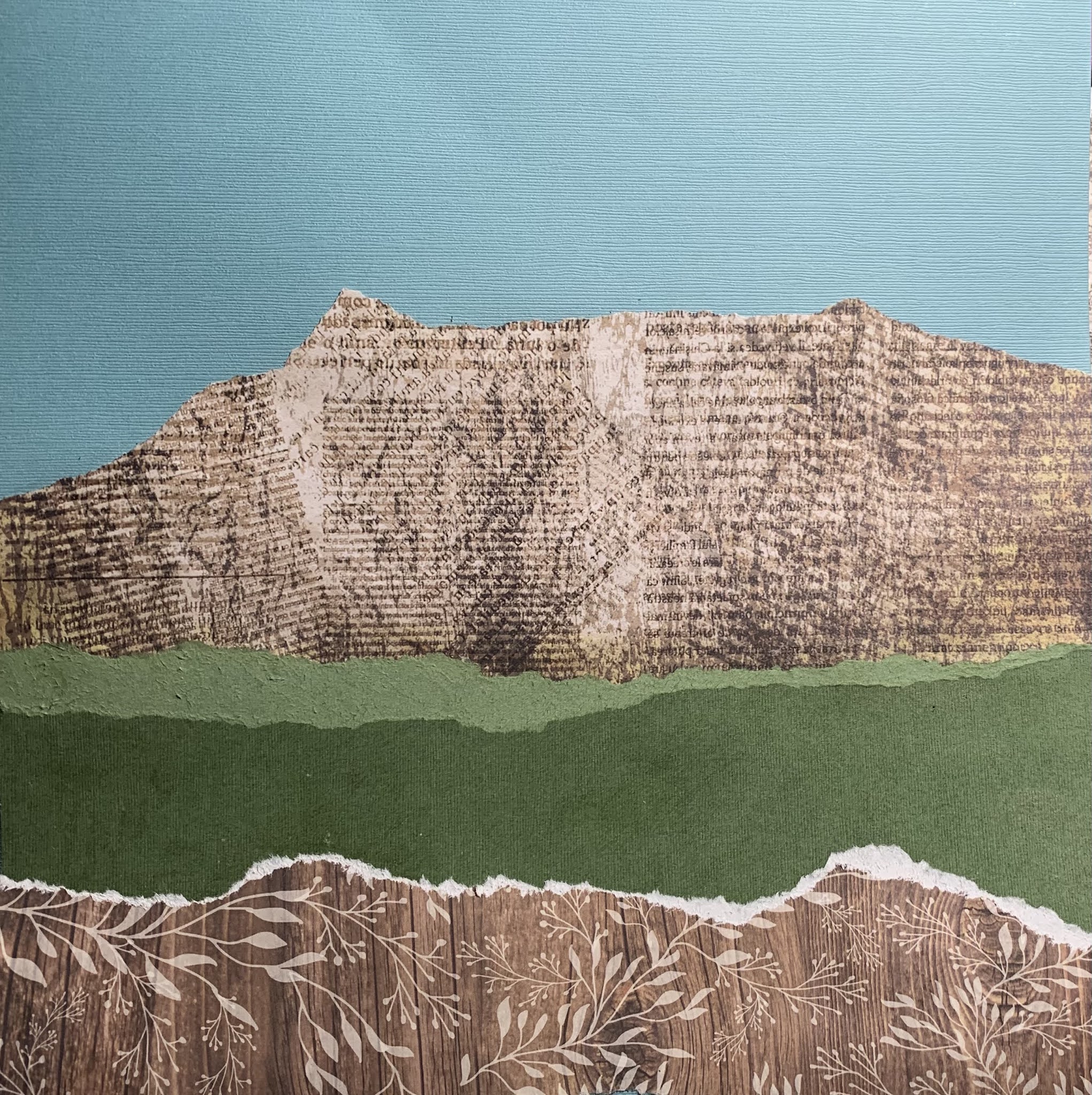
Alaska and the great American West offer dramatic landscapes, beautiful mountains and big sky!!Every trip has been a feast for the eyes.

I made these 12 x 12" mixed media works on paper recently and will include some, if not all, of them in my upcoming exhibit Footprints: Travel Landscapes at Da Vinci Art Alliance in May 2021. The exhibition will include art inspired by my travel to the seven continents.  Details will follow.

Wednesday, February 25, 2015

Alaska- Inspiring Awe + ART

It is no wonder I called this series "Believe Your Eyes," since the visual beauty of Alaskan vistas is astounding. Here are some photographs of some beautiful scenes along our way:


And here are some more of my interpretations:

Golden Wilderness- monotype

Silver Spring in the Forest- monotype

Silvered Trees- monotype

Golden Forest- monotype

Believe Your Eyes- mixed media

Monday, February 23, 2015

Believe Your Eyes- Alaskan Inspired Art

Last summer we went to Alaska and I was overwhelmed with the natural beauty there. A trip to Alaska amid all the natural beauty made it hard to believe my eyes when I saw the incredible natural resources. Over 75% of the land is preserved wilderness! They have wooded wilderness, mountains, lakes, glaciers, abundant flowers in summer- everything to make your visit a stunning visual experience. I captured some of the color and beauty from that trip into this series.

There are 15 images in this collection.

Believe Your Eyes- mixed media


Believe Your Eyes 2- mixed media


Endless Wonder 1- mixed media

Endless Wonder 2- mixed media

Golden Forest- monotype

Tuesday, October 21, 2014

Departure from the Familiar: Art Inspired by My Alaska Trip

Believe Your Eyes 1- Mixed Media
Believe Your Eyes 2- Mixed Media

Glacier Sparkle- Monotype with Collage

Northern Lights 1- Mixed Media

Northern Lights 2- Mixed Media

Northern Lights 3- Monotype

Resilient Retreat 1- Monotype with Collage

Resilient Retreat 2- Monotype with Collage

Resilient Retreat 3- Monotype with Collage  
Travel is about departure from the familiar. whether it is in the Antarctic or the hills of Rome, the point is to get away from your everyday existence and be in a new environment, to give up your everyday self to the new surroundings and the new context.

Alaska is a place of space.. vast and beautiful space... the eye can see further than it can on Fariston Drive on anywhere else I usually go in my regular life. The land, the water, the ice- all contribute to the unforgettable beauty of Alaska! The vistas are large, colorful and exciting. I bring all these elements into the works on paper that I made inspired by the many images that linger in my mind's eye.

Tuesday, September 2, 2014

ALASKA- Summer Hours Bring Lots of Flowers

During the summer months, there is lots of sunshine. The longest days in June are 17 hours plus. We got around 15 with sunset after 10 PM. Great for traveling! Of course, the downside is in the winter when in December there is less than 3 hours of daylight. All that darkness! Ugh!

I guess that's why there are flowers everywhere now. Here are some of my favorite examples of the beautiful flowers I saw around Alaska. Capture and enjoy the light while you can!! The flowers are adding to the beauty of the scenery...


Monday, September 1, 2014

ALASKA- The Pipeline and The Fairbanks Ice Museum

The Trans-Alaska Pipeline System (TAPS) includes the trans-Alaska crude-oil pipeline, 11 pump stations, several hundred miles of feeder pipelines, and the Valdez Marine Terminal. TAPS is one of the world's largest pipeline systems. It is commonly called the Alaska pipeline, trans-Alaska pipeline, or Alyeska pipeline, (or the pipeline as referred to in Alaska), but those terms technically apply only to the 800 miles of the pipeline with the diameter of 48 inches that conveys oil from Prudhoe Bay to Valdez, Alaska. The crude oil pipeline is privately owned by the Alyeska Pipeline Service Company.

The pipeline was built between 1974 and 1977 after the 1973 oil crisis caused a sharp rise in oil prices in the United States. This rise made exploration of the Prudhoe Bay oil field economically feasible. Environmental, legal, and political debates followed the discovery of oil at Prudhoe Bay in 1968, and the pipeline was built only after the oil crisis provoked the passage of legislation designed to remove legal challenges to the project.

The task of building the pipeline had to address a wide range of difficulties, stemming mainly from the extreme cold and the difficult, isolated terrain. The construction of the pipeline was one of the first large-scale projects to deal with problems caused by permafrost, and special construction techniques had to be developed to cope with the frozen ground. The project attracted tens of thousands of workers to Alaska, causing a boom town atmosphere in Valdez, Fairbanks, and Anchorage.

The first barrel of oil traveled through the pipeline in 1977, and full-scale production began by the end of the year. Several notable incidents of oil leakage have occurred since, including those caused by sabotage, maintenance failures, and gunshot holes. As of 2010, the pipeline has shipped almost 16 billion barrels of oil.

The pipeline is checked and flown over several times a day

We stopped at a checkpoint near Fairbanks


The Fairbanks Ice Museum is downtown in a former movie theater. The temperature of the ice sculpture area is 20 degrees! They have many creative sculptures and a demonstration of an ice carving. It's a fun place to go!
Norman in the ice house

The ice bird carved in front of the audience


ALASKA- Fairbanks

We took a cruise on the Riverboat Discovery into Alaska.

We took a guided walking tour of an Athabascan Indian village. You’ll see an Athabascan Indian village with cabins made of spruce logs, a cache used for storing supplies, a primitive spruce bark hut and fur pelts. Our guides explained how the wolf, fox, martin and beaver were used to provide food and protection in the harsh Arctic climate. They will explained how the Athabascans skillfully survived for over 10,000 years and how they adapted to village life and Western culture in the past century.

We saw an Alaskan bush pilot takeoff and land right next to the boat!

We visited the home and kennels of the late four-time Iditarod champion Susan Butcher as we pass Trailbreaker Kennels along the Chena River. We learned first hand about kennel life and the challenges that go into making a champion dogsled team. A senior handler at Trailbreaker Kennels shared stories of life on the trails as puppies play in anticipation of joining the team. We saw a dog mushing demonstration!

At the end of your guided tour, we explored the village on our own, interacted with our guides and visited the dogs from Susan Butcher’s kennels.


Riverboat Discovery
Riverboat Discovery
Scenery along the river

Learning about the culture
Champion dogs!

Saturday, August 30, 2014

ALASKA- Denali National Park and Preserve

Denali National Park and Preserve is a national park and preserve located in Interior Alaska, centered on Denali (Mount McKinley), the highest mountain in North America. The park encompasses more than 6 million acres, of which 4,724,735.16 acres  are federally owned. The national preserve is 1,334,200 acres, of which 1,304,132 acres are federally owned. On December 2, 1980, a 2,146,580 acre  Denali Wilderness was established within the park. Denali's landscape is a mix of forest at the lowest elevations, including deciduous taiga. The preserve is also home to tundra at middle elevations, and glaciers, rock, and snow at the highest elevations. The longest glacier is the Kahiltna Glacier. Today, 400,000 people visit the park annually. They view wildlife, climb mountains, and backpack. Wintertime activities includes dog-sledding, cross-country skiing, and snow-machining.

The name of Mount McKinley National Park was subject to local criticism from the beginning of the park. The word "Denali" means "the high one" in the native Athabaskan language and refers to the mountain itself. The mountain was named after newly elected US president William McKinley in 1897 by local prospector William A. Dickey. The United States government formally adopted the name Mount McKinley after President Wilson signed the bill creating Mount McKinley National Park into effect in 1917 [5] In 1980, Mount McKinley National Park was combined with Denali National Monument, and the Alaska National Interest Lands Conservation Act named the combined unit the Denali National Park and Preserve. At that time the Alaska state Board of Geographic Names changed the name of the mountain to "Denali." However, the U.S. Board of Geographic Names does not recognize the change. Alaskans tend to use "Denali" and rely on context to distinguish between the park and the mountain.

We took an 8 hour bus tour through to park! Gorgeous scenery but too cloudy to see Mt McKinley aka Denali. We also saw animals but from very far and too far for my camera to take decent photos. Bears looked like dots on the landscape. So enjoy these photos of the beautiful scenery we saw in the 6 million plus acres!!